2026-10-05 ·
What To Do When an Appliance Causes Water Damage
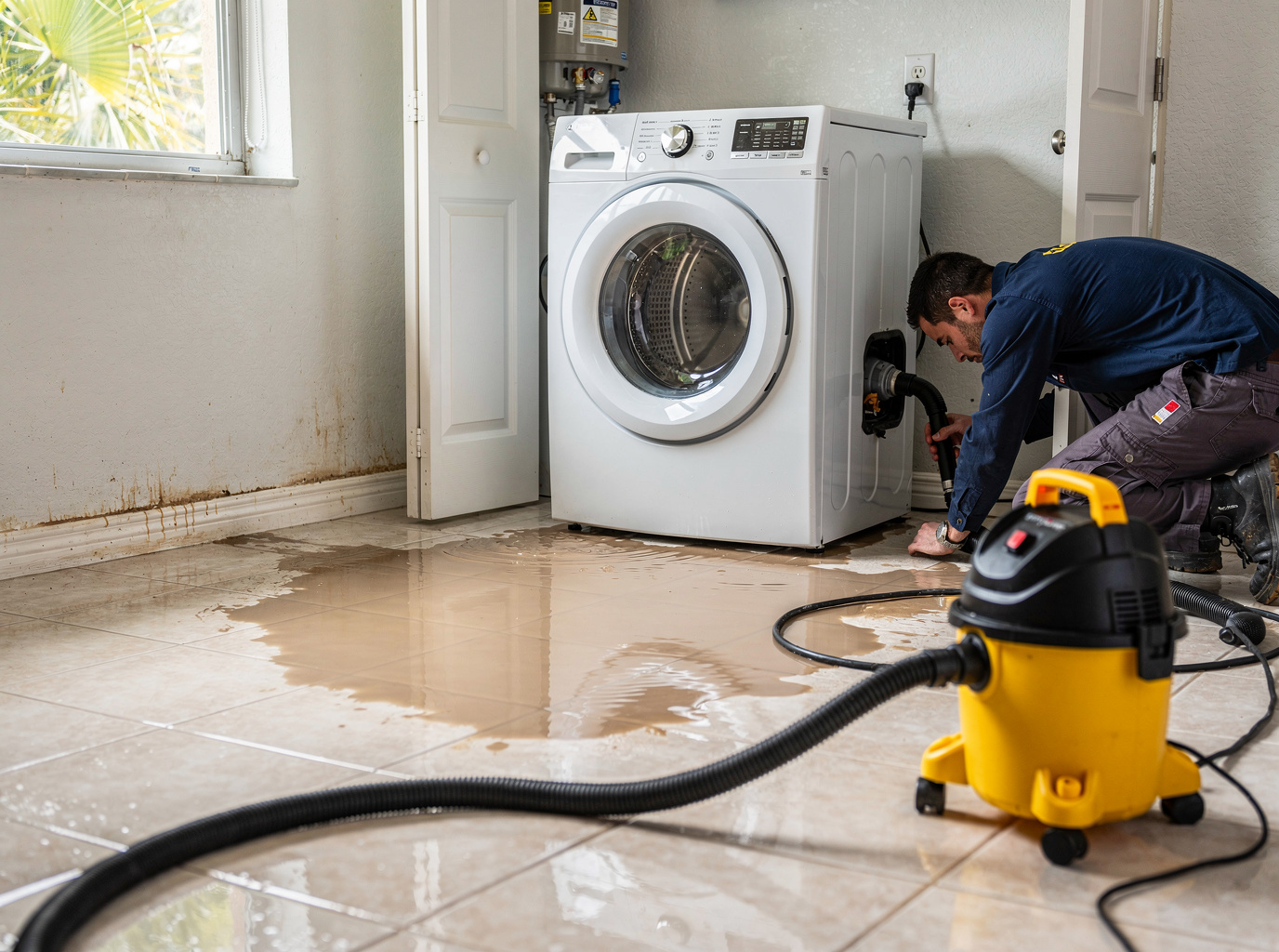
When an appliance such as a washing machine or water heater leaks in a Port St. Lucie home, shut off the water supply at the appliance valve or main shutoff and unplug the unit right away to limit spread across slab foundations common in St. Lucie County neighborhoods like Tradition and St. Lucie West.
Shut Off Water and Power First
Locate the appliance shutoff valve behind the unit or at the wall and turn it clockwise until tight. If the valve fails, close the main water line near the water meter outside the garage. Cut power at the breaker to any affected outlets or the appliance itself because standing water near wiring creates shock risks in older 1990s-era homes found throughout Port St. Lucie. Move furniture and belongings out of the path while the water is still contained. These steps stop the flow before it reaches carpet or baseboards where moisture quickly wicks into drywall.
Protect Belongings and Contain the Spill
Place towels or a wet vac along the edge of the puddle to keep water from traveling under cabinets or into adjacent rooms. In Port St. Lucie’s flat terrain and high water table, even small appliance leaks can migrate under the slab edge and reappear days later. Lift area rugs and roll them for drying outside. Remove any standing water from tile or vinyl floors within the first hour because the region’s June-through-October rainy season adds humidity that slows natural evaporation. Document the affected square footage with photos for insurance purposes before further disturbance.
Call for Professional Extraction
Once the source is stopped, contact a local team for appliance leak water extraction if water has reached more than a few square feet or soaked into carpet padding. Technicians use truck-mounted pumps and air movers sized for Florida slab homes to pull moisture from underlayment before it reaches subfloor plywood. Delaying extraction lets mold colonies form within 24–48 hours in the warm, moist air typical of St. Lucie County. For water heater leaks specifically, water heater leak extraction crews know how to isolate the unit without flooding the garage slab common in local builds.
Dry and Monitor Hidden Areas
After bulk water removal, run dehumidifiers set to 45 percent relative humidity and place air movers at floor level to force drying under toe-kicks and behind appliances. Check utility rooms and laundry closets in Port St. Lucie homes built on monolithic slabs because trapped moisture often stays hidden until it softens baseboards weeks later. Use a moisture meter on drywall up to 12 inches above the floor line every 24 hours. If readings stay above 15 percent after three days, hidden saturation likely exists and requires targeted wall or floor water extraction.
Prevent Repeat Appliance Leaks
Replace rubber supply hoses every 5–7 years and install stainless-steel braided lines rated for 10–15 years of service. In Port St. Lucie’s hard water from the Floridan aquifer, sediment buildup shortens water heater life to roughly 8–12 years, so schedule annual flushing to reduce corrosion at the drain valve. Keep the area around the appliance clear for quick access and test shutoff valves twice a year. These habits cut the chance of sudden leaks that spread across tile grout and into wall cavities during the wet season. For cost details on full extraction jobs in Florida, see how much does water extraction cost in Florida?. If the leak has already spread beyond one room, review emergency water extraction in Florida when to call for help to decide next steps.