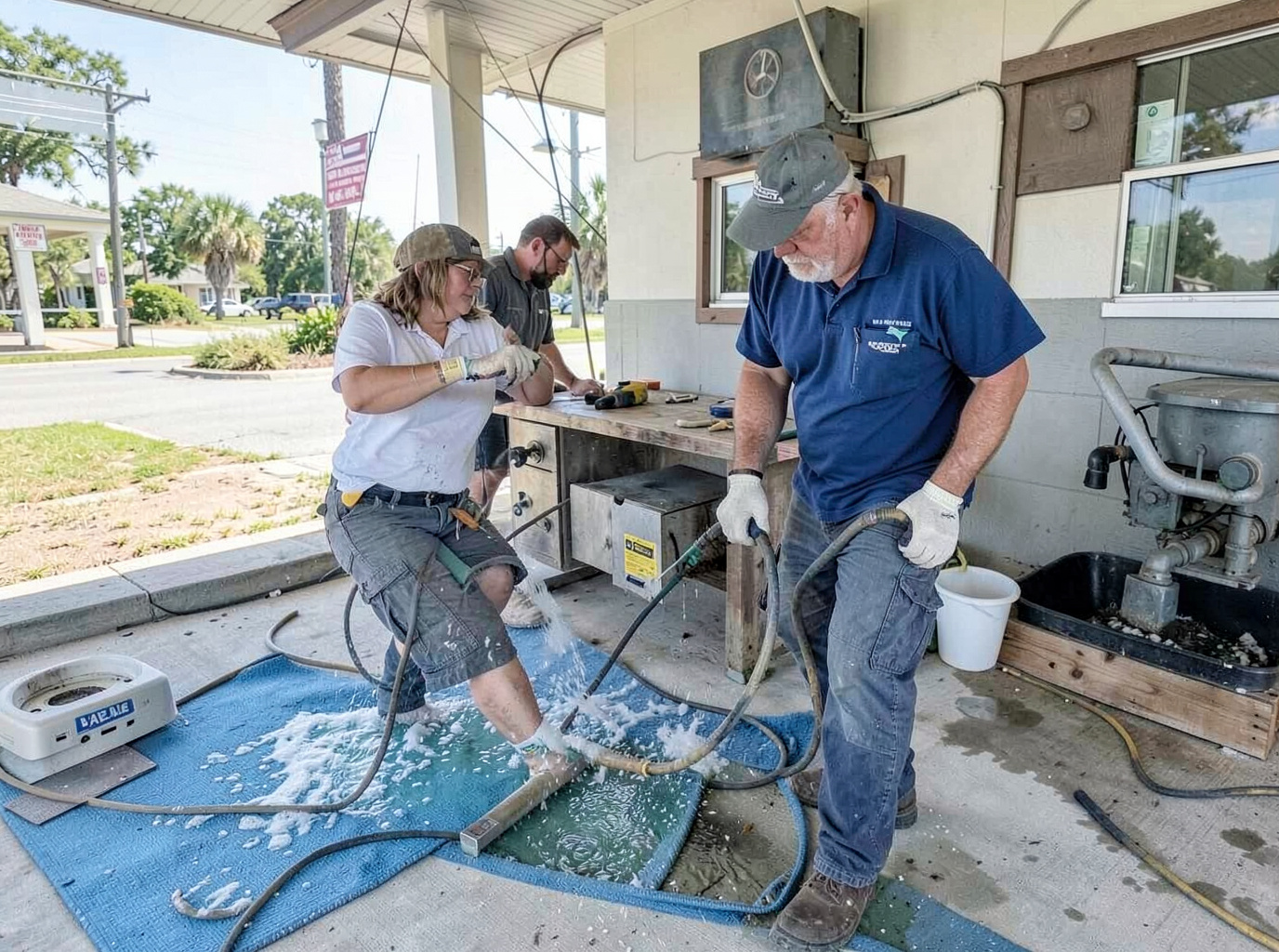
In Port St. Lucie slab-on-grade homes built from the 1980s onward, carpet often sits directly over concrete that holds moisture after roof leaks or appliance failures. Water migrates laterally under the pad and into baseboards, so extraction must reach the backing and subfloor seams before mold sets in during the humid summer months. Technicians use truck-mounted units to pull water from the fibers and then test concrete moisture levels with meters to confirm the slab has returned to acceptable dryness.
Heavy afternoon thunderstorms common across St. Lucie County can push water under exterior doors in neighborhoods like Hidden Oaks or along the North Fork of the St. Lucie River. Carpet installed over older padding absorbs and holds this water, creating hidden pockets that standard shop-vacs miss. Proper extraction includes lifting edges, removing saturated padding in sections, and applying air movers at floor level to force evaporation without pushing moisture deeper into the slab.
Edge cases include glued-down carpet in bathrooms or laundry rooms where water has wicked into the adhesive. Attempting to extract without breaking the bond can leave residue that later supports bacterial growth. In these situations the pad is cut away, the concrete is cleaned and dried, and new padding is installed only after moisture readings drop below the threshold that supports mold.
Technician insight
In Port St. Lucie the thing that catches most people out with Carpet Water Extraction is the high water table under older slab homes in areas like River Park; water sits under the carpet pad after even modest rain and homeowners often stop drying too soon because the surface feels dry while the concrete stays wet.
Hidden Moisture Under Carpet After Summer Storm
Water entered under a sliding door in a Port St. Lucie home during an afternoon thunderstorm. Meters showed elevated moisture in the slab beneath the living-room carpet even after the surface dried. Extraction removed water from the pad, saturated sections were replaced, and directed drying brought slab readings back to normal within 48 hours.
Carpet Water Extraction Services We Offer
✓Emergency Carpet Extraction
Immediate removal of standing water from carpet and pad using high-volume equipment to limit secondary damage in Port St. Lucie homes.
✓Subfloor Moisture Detection
Meter testing of concrete slabs and wood subfloors to locate hidden moisture that standard drying leaves behind.
✓Carpet Pad Removal and Replacement
Cutting out saturated padding, disposing of it, and installing fresh padding matched to the existing carpet weight.
✓Post Extraction Drying
Placement of air movers and dehumidifiers directed at the carpet backing until moisture readings stabilize.
✓Stain Treatment After Water Damage
Targeted cleaning of water-borne stains on carpet fibers once extraction and drying are complete.
Carpet Water Extraction Cost in Florida
| Service | Typical Range | What Affects It |
|---|---|---|
| Single Room Extraction | $175–$350 | Varies with room size and whether padding replacement is needed |
| Whole House Carpet Extraction | $600–$1,200 | Larger square footage and multiple rooms increase time and equipment use |
| Subfloor Moisture Testing | $75–$150 | Added when hidden moisture in slab is suspected |
| Pad Replacement Per Room | $125–$250 | Depends on carpet type and disposal requirements |
Ranges are typical for Florida and confirmed with an exact written quote before any work starts.
How it works
- 1
On-Site Assessment
Technician inspects affected rooms, checks for hidden water under baseboards, and records moisture readings on the slab.
- 2
Water Extraction
High-capacity equipment pulls water from carpet and pad while edges are lifted to reach the backing.
- 3
Pad Evaluation
Saturated sections of padding are removed and the concrete is cleaned before drying equipment is set.
- 4
Final Moisture Check
Readings are retaken after drying to confirm the slab and carpet are within safe limits before reinstallation.
Pricing
Cost depends on square footage, water depth, and whether padding must be replaced.