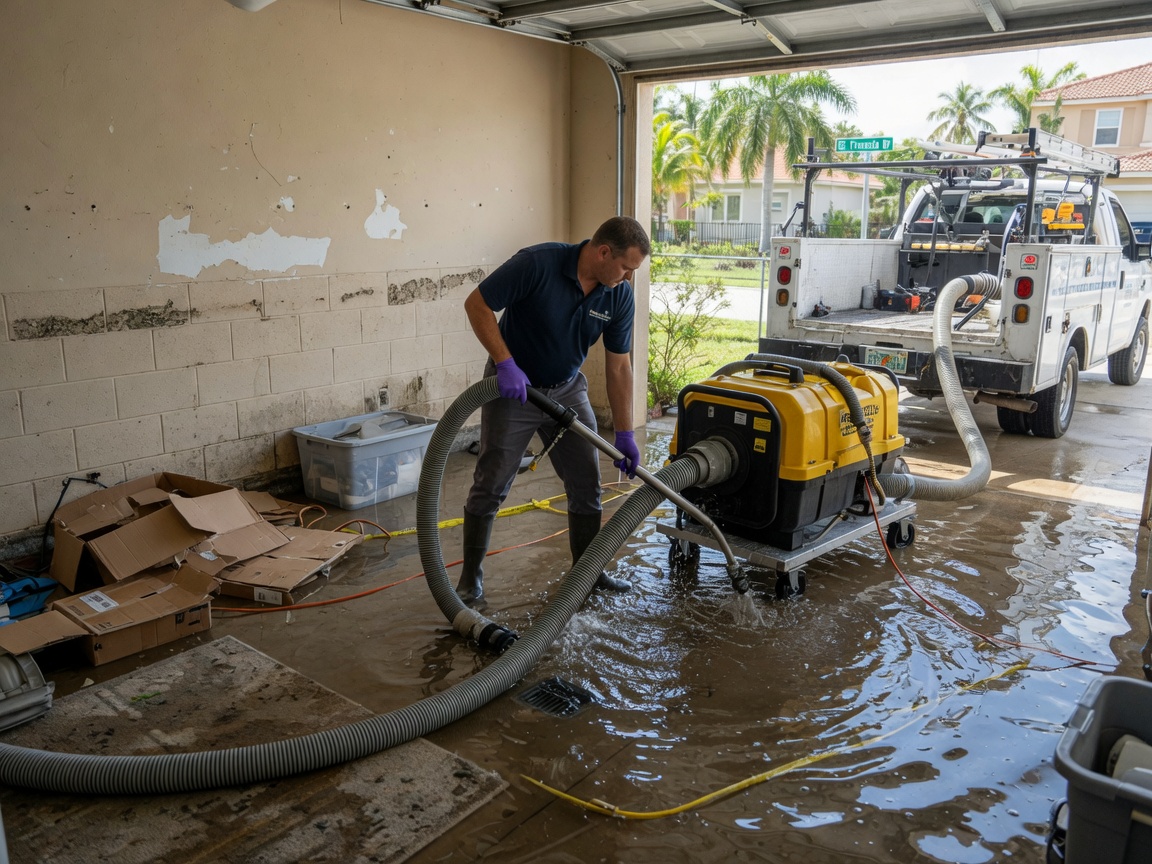
Port St. Lucie commercial buildings often sit on slab foundations with limited crawl space access, so standing water from heavy summer rains or hurricane remnants quickly migrates under flooring and into wall cavities. Extraction crews must pull baseboards early and use moisture meters on concrete to locate hidden saturation that would otherwise feed mold within 48 hours in the area’s high humidity.
Retail strips along US-1 and warehouses near the Turnpike typically contain mixed materials like vinyl tile over concrete, metal shelving, and gypsum walls. Removing water from these surfaces requires different equipment than residential jobs because inventory and fixtures cannot always be moved quickly, and power interruptions during storms limit the use of large dehumidifiers.
St. Lucie County code requires proper disposal of extracted water when it contacts sewage lines or chemical storage, which is common in older commercial plazas. Technicians document each step and separate clean flood water from contaminated sources before pumping to avoid fines or liability for business owners reopening after an event.
Technician insight
In Port St. Lucie the thing that catches most people out with commercial water extraction is the high water table combined with clay-heavy soil; after a storm, water sits under slabs longer than expected and keeps feeding moisture back into walls even after the visible floor looks dry.
Strip Mall Unit After Heavy Rain
Water entered a clothing store unit through the rear door during overnight rain near Gatlin Boulevard. Extraction crews found saturation under vinyl tile and into the shared wall with the neighboring unit. Pumps removed the standing water, then drying equipment ran for four days until concrete readings dropped to acceptable levels.
Commercial Water Extraction Services We Offer
✓Office Building Water Extraction
Rapid removal of standing water from carpeted and tiled office floors followed by targeted drying to protect electronics and file storage.
✓Retail Space Flood Recovery
Extraction and moisture control in storefronts along Port St. Lucie Boulevard to reopen sales floors with minimal inventory loss.
✓Restaurant Kitchen Water Removal
Handling water in grease-laden commercial kitchens while separating contaminated runoff and protecting cooking equipment.
✓Warehouse Moisture Extraction
Large-volume pumping and air movement in storage facilities near the Turnpike to prevent damage to pallet goods and racking.
✓Strip Mall Water Damage Drying
Coordinated extraction across multiple connected units after roof leaks or parking-lot flooding common in St. Lucie County.
Commercial Water Extraction Cost in Florida
| Service | Typical Range | What Affects It |
|---|---|---|
| Small retail or office extraction | $900–$1,800 | Depends on square footage and access to slab edges. |
| Restaurant kitchen water removal | $1,200–$2,400 | Higher when grease traps or electrical shutoffs are involved. |
| Warehouse section drying | $1,500–$3,500 | Varies with ceiling height and volume of racking. |
Ranges are typical for Florida and confirmed with an exact written quote before any work starts.
How it works
- 1
On-Site Assessment
Walk the affected commercial space to identify water sources, map saturation in slabs and walls, and note inventory that must stay in place.
- 2
Water Extraction
Deploy submersible pumps and truck-mounted units to remove bulk water from floors and low areas before it spreads further.
- 3
Drying and Dehumidification
Place commercial air movers and dehumidifiers while monitoring moisture levels in concrete and wall cavities over several days.
- 4
Final Moisture Verification
Re-check readings and document dry conditions before returning the space to the business owner for cleanup and restocking.
Pricing
Pricing varies with square footage, water depth, and whether contents must remain in place during extraction.