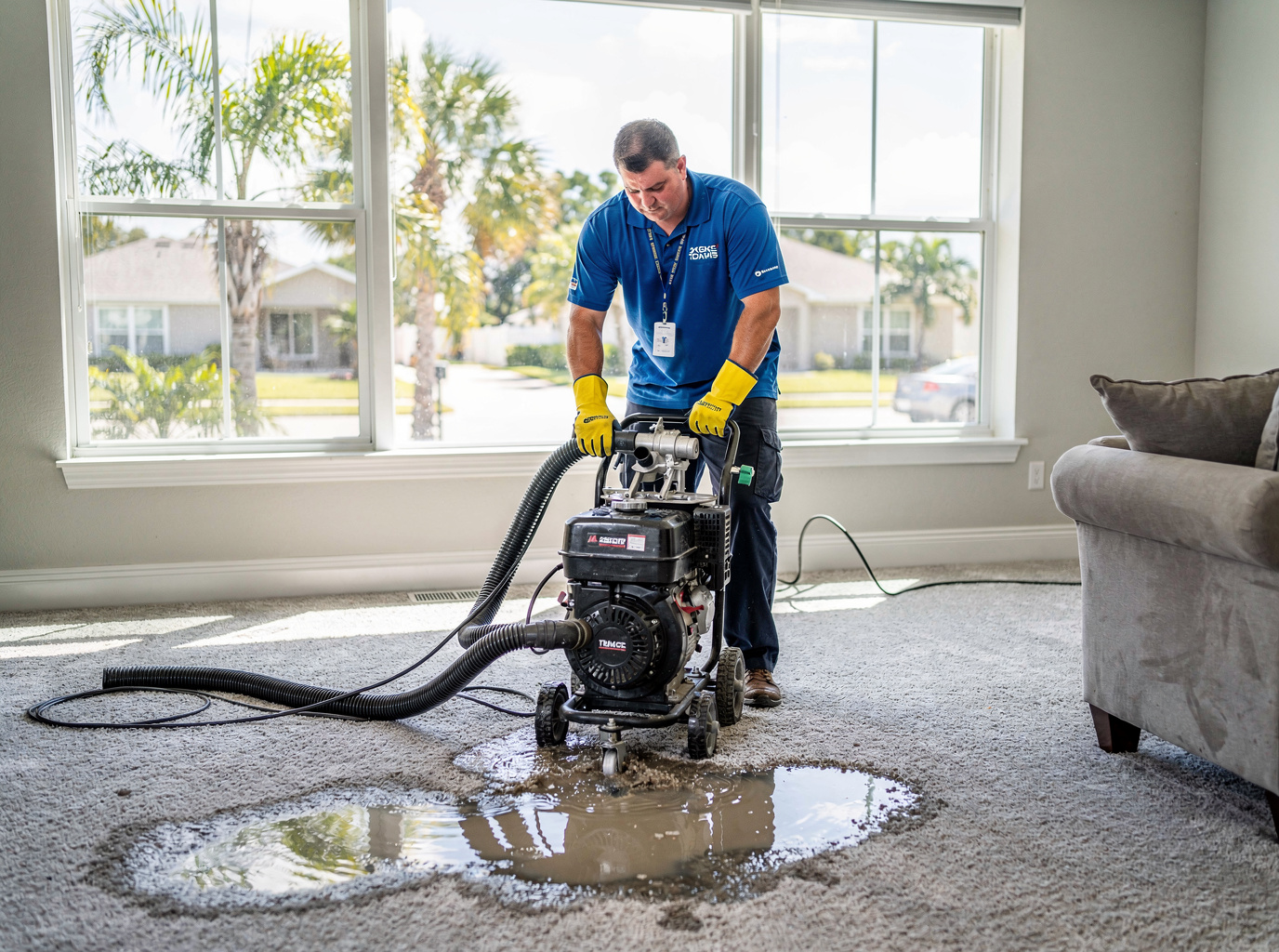
Port St. Lucie homes built on concrete slabs from the 1980s onward often see water migrate under the slab during the June-to-October rainy season. Extraction crews must locate the entry points near plumbing penetrations or low spots in the yard where drainage is poor because of the flat terrain and clay-heavy soil. Removing standing water quickly prevents the moisture from wicking into drywall and baseboards that sit directly on the slab.
Hurricane remnants and afternoon thunderstorms dump several inches of rain in hours, overwhelming gutters and French drains common in neighborhoods like Tradition and St. Lucie West. Technicians use submersible pumps and truck-mounted extractors rated for 200-plus gallons per minute to pull water from carpets, tile, and under cabinets before mold sets in during the high-humidity recovery period. Edge cases include water trapped behind toe-kicks or inside HVAC return plenums that sit low to the floor.
St. Lucie County properties near the North Fork of the St. Lucie River face tidal influences and elevated groundwater that can push water back into crawl spaces or garage slabs after the rain stops. Extraction work here requires repeated visits over two or three days because the soil stays saturated and re-supplies moisture through expansion joints. Homeowners who attempt their own shop-vac removal usually miss the water under appliances and behind toilets, leading to hidden rot in the subfloor.
Technician insight
In Port St. Lucie the thing that catches most people out with residential water extraction is how fast water travels under the slab during a single afternoon thunderstorm. The flat lots and high water table in areas like Tradition mean you can pull the visible water and still have moisture reappear through expansion joints two days later if you do not keep equipment running.
Tradition Home After Afternoon Storm
Water entered a single-story home through the garage slab joint after three inches of rain fell in ninety minutes. Extraction crews found water had traveled eight feet under the laundry room tile and into the hallway carpet. Pumps removed the standing water the same day, and drying equipment stayed in place for seventy-two hours until meter readings showed the slab was dry.
Residential Water Extraction Services We Offer
✓Slab Leak Water Extraction
Locate and pull water that has traveled under concrete slabs from plumbing failures common in Port St. Lucie homes.
✓Storm Flood Extraction
Remove standing water after heavy rain or tropical systems that overwhelm drainage in neighborhoods like Tradition and St. Lucie West.
✓Appliance Leak Extraction
Extract water from refrigerator, washer, or water heater leaks that spread across tile and into adjacent rooms.
✓Bathroom Flood Water Removal
Clear water from tub overflows, toilet leaks, and shower pan failures before it reaches hallway carpet or slab edges.
✓Crawl Space Water Extraction
Pump and dry water that enters vented crawl spaces during prolonged wet periods near the river corridor.
Residential Water Extraction Cost in Florida
| Service | Typical Range | What Affects It |
|---|---|---|
| Single-room extraction | $350–$650 | One affected area, no slab migration |
| Multi-room flood extraction | $800–$1,600 | Two or more rooms plus hallway |
| Slab water extraction add-on | $400–$900 | Requires drilling or perimeter access |
| Equipment rental per day | $150–$300 | Air movers and dehumidifiers after extraction |
Ranges are typical for Florida and confirmed with an exact written quote before any work starts.
How it works
- 1
Arrival and Assessment
Technician inspects affected rooms, checks slab edges and low spots, and maps water migration paths.
- 2
Water Removal
Submersible pumps and extractors pull standing water from floors, under cabinets, and slab joints.
- 3
Moisture Mapping
Meters locate hidden moisture behind baseboards and under tile to guide further extraction.
- 4
Drying Setup
Air movers and dehumidifiers are placed to finish drying the slab and framing.
Pricing
Upfront quote after on-site inspection; price varies by water volume, number of rooms, and whether slab extraction is required.