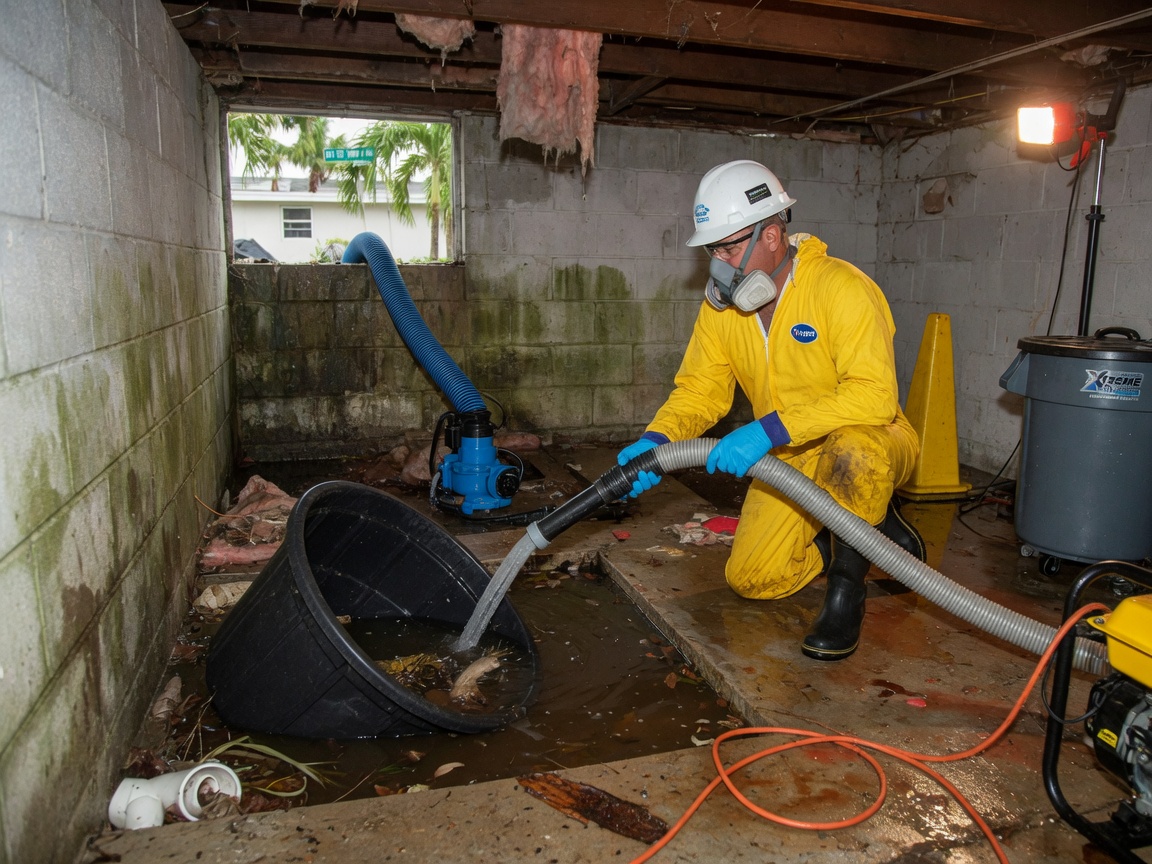
Port St. Lucie homes built before 2000 in neighborhoods like St. Lucie West and Tradition often sit on a high water table with shallow foundations. When a sump pump fails during the June-to-October rainy season, water rises quickly through slab edges and into finished basements or garages. Extraction crews must first locate the exact entry points around the pump basin before pulling standing water, because trapped moisture under vinyl flooring or behind drywall will trigger mold within 48 hours in the local humidity.
Heavy afternoon thunderstorms common to St. Lucie County dump several inches in an hour, overwhelming older 1/3-hp pumps installed in many 1990s homes. Technicians use submersible pumps with 2-inch discharge lines routed to street storm drains rather than yard swales to avoid re-flooding the property. After bulk removal, moisture meters check concrete slabs and sill plates, because the sandy soil here retains water against foundation walls longer than clay soils farther north.
Crawl spaces under elevated homes in River Park and along the North Fork of the St. Lucie River present extra challenges. Failed sump pumps allow water to pool against HVAC ductwork and insulation. Crews remove wet material, then run commercial air movers and dehumidifiers sized for the square footage while monitoring for hidden pockets behind knee walls. Skipping these steps leaves hidden moisture that later causes musty odors and wood rot in the coastal climate.
Technician insight
In Port St. Lucie the thing that catches most people out with sump pump failure is how fast water migrates under the slab in pre-2005 homes once the pump stops during an afternoon thunderstorm. The sandy soil here holds moisture against the foundation longer than people expect, so you have to keep drying equipment running even after visible water is gone or the floor will stay damp for weeks.
St. Lucie West Home After Overnight Rain
A 1998 single-story home in St. Lucie West had its 1/3-hp sump pump fail during a three-inch overnight storm. Water rose through the garage slab edge and into the utility room. Crews extracted 400 gallons, removed wet insulation from the adjacent crawl space, and ran drying equipment for four days until moisture readings matched the rest of the house.
Sump Pump Failure Water Extraction Services We Offer
✓Crawl Space Water Extraction
Removes standing water and saturated insulation from crawl spaces after sump pump failure, preventing mold growth against floor joists.
✓Basement Slab Drying
Extracts water from under finished slabs and uses targeted drying to protect flooring in lower-level rooms common in Port St. Lucie homes.
✓Garage and Utility Room Extraction
Clears water from garages and utility areas where sump pumps discharge, protecting electrical panels and stored items from corrosion.
✓Post-Storm Sump Basin Cleaning
Removes sediment and debris from the sump basin after heavy rain events so the replacement pump operates without immediate clogging.
✓Moisture Mapping and Monitoring
Uses meters to locate hidden moisture in walls and floors, then tracks drying progress until levels return to normal for the local climate.
Sump Pump Failure Water Extraction Cost in Florida
| Service | Typical Range | What Affects It |
|---|---|---|
| Single-room extraction and drying | $450–$850 | Higher end when slab moisture requires extended equipment time |
| Crawl space extraction | $650–$1,200 | Varies with insulation removal and square footage |
| Multi-area job after heavy rain | $900–$1,800 | Includes garage, utility room, and adjacent living space |
Ranges are typical for Florida and confirmed with an exact written quote before any work starts.
How it works
- 1
Site Assessment
Technician inspects the failed sump, measures water depth, and checks for hidden moisture in adjacent rooms and crawl spaces.
- 2
Water Removal
Submersible pumps extract standing water and route it safely away from the foundation to avoid re-entry into the home.
- 3
Targeted Drying
Air movers and dehumidifiers run in affected zones while crews monitor moisture levels in slabs, walls, and insulation.
- 4
Final Verification
Return visit confirms all surfaces are dry and no secondary moisture remains before equipment is removed.
Pricing
Pricing depends on water volume, number of affected rooms, and drying duration required by local humidity.