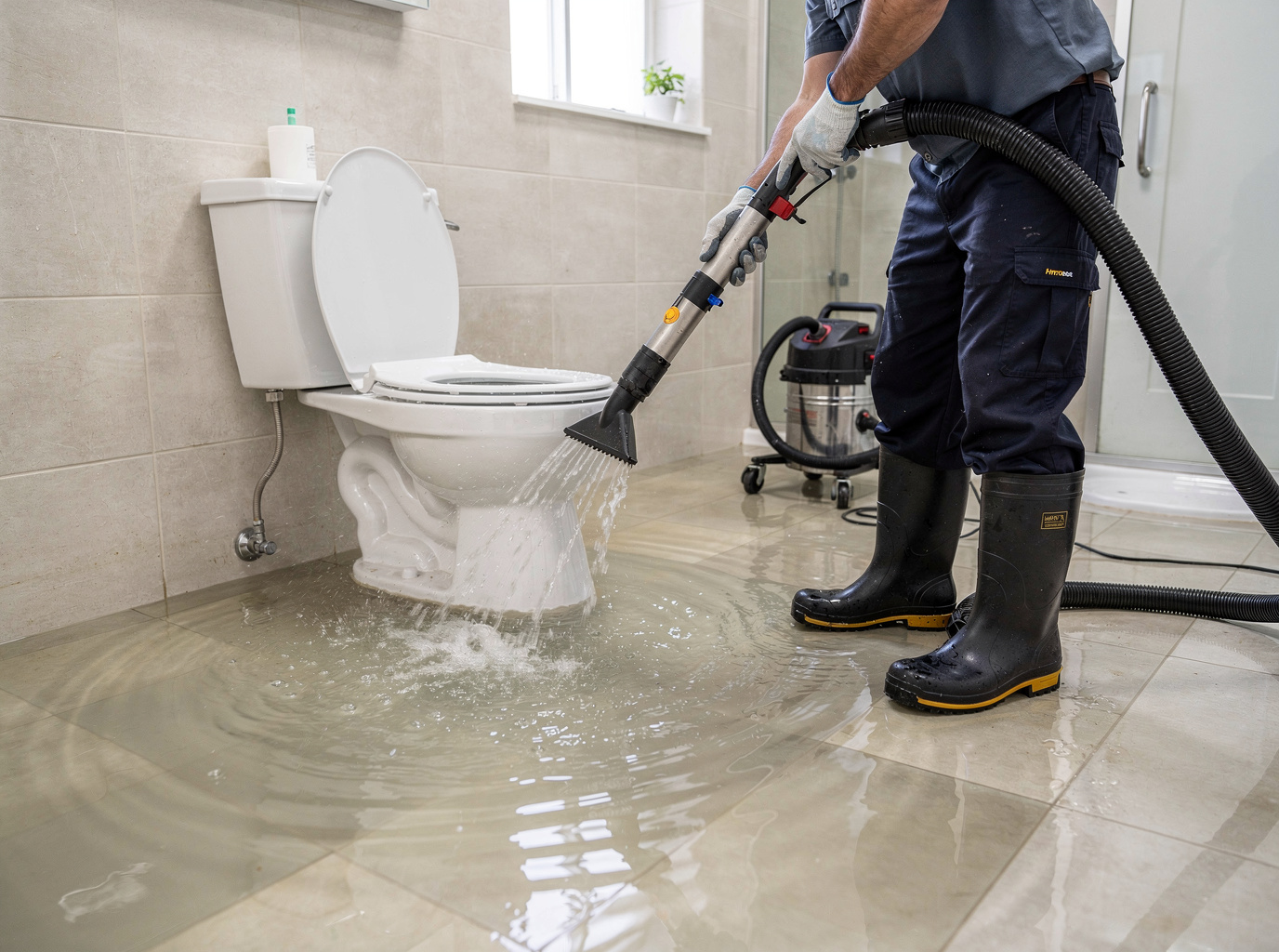
Toilet overflows in Port St. Lucie homes often spread across concrete slab foundations common in neighborhoods like St. Lucie West and Tradition. Water travels under baseboards and into expansion joints where the high water table in St. Lucie County allows moisture to re-enter the structure after initial removal. Technicians must pull carpet and pad quickly, then use moisture meters to locate hidden pockets behind vanities or in adjacent closets before mold sets in during the humid rainy season.
Afternoon thunderstorms and occasional tropical systems increase the risk of secondary damage when extraction is delayed. In slab homes built from the 1980s onward, water can migrate along plumbing trenches and under tile, requiring targeted drying rather than whole-room fans. Proper removal includes lifting quarter-round trim and checking for saturation in the thin layer of leveling compound used on many local floors.
Homeowners sometimes attempt their own cleanup with shop vacs, which leaves residual moisture that later causes cupping in wood flooring or musty odors in carpet. Professional extraction uses truck-mounted pumps rated for sewage water followed by air movers and dehumidifiers sized for the square footage and slab thickness typical in Port St. Lucie single-family homes.
Technician insight
In Port St. Lucie the thing that catches most people out with Toilet Overflow Water Extraction is the high water table in St. Lucie County letting moisture wick back into slab homes days after the initial pump-out, especially in neighborhoods like St. Lucie West where plumbing trenches run right under the concrete.
Overflow Behind Vanity in Tradition Home
Water from a clogged toilet reached under the vanity and into the hallway carpet of a slab home. Meters showed saturation along the plumbing chase. Extraction removed the carpet and pad, baseboards were lifted, and drying equipment ran for three days until slab readings normalized.
Toilet Overflow Water Extraction Services We Offer
✓Bathroom Floor Extraction
Removes standing water from tile and grout lines on slab floors before it reaches adjacent rooms.
✓Carpet and Pad Removal
Cuts and disposes of saturated carpet and padding to prevent mold growth in humid Port St. Lucie conditions.
✓Subfloor Moisture Detection
Uses meters and infrared scans to locate hidden water along plumbing chases in concrete slabs.
✓Baseboard and Trim Extraction
Removes and resets baseboards to extract water that has wicked behind trim in slab construction.
✓Antimicrobial Treatment Application
Applies EPA-registered agents to affected surfaces after extraction to control bacteria from toilet water.
✓Structural Drying Monitoring
Places and tracks drying equipment until moisture readings return to normal levels in St. Lucie County homes.
Toilet Overflow Water Extraction Cost in Florida
| Service | Typical Range | What Affects It |
|---|---|---|
| Standard bathroom overflow extraction | $250–$450 | Single room, carpet removal included |
| Extended extraction into hallway or closet | $400–$650 | Additional rooms or under-cabinet water |
| Tile floor drying with slab moisture check | $300–$550 | Grout and expansion joint focus |
| Full drying equipment package | $150–$300 | Per day after initial extraction |
Ranges are typical for Florida and confirmed with an exact written quote before any work starts.
How it works
- 1
Site Assessment
Technician inspects the overflow area, checks slab joints, and maps water migration into nearby rooms.
- 2
Water Removal
Truck-mounted equipment extracts standing water and sewage from floors and under cabinets.
- 3
Hidden Moisture Extraction
Baseboards are lifted and moisture meters locate remaining water along slab edges and plumbing lines.
- 4
Drying and Monitoring
Air movers and dehumidifiers run until readings confirm the slab and subfloor are dry.
Pricing
Cost depends on water volume, affected square footage, and whether carpet or tile must be removed.