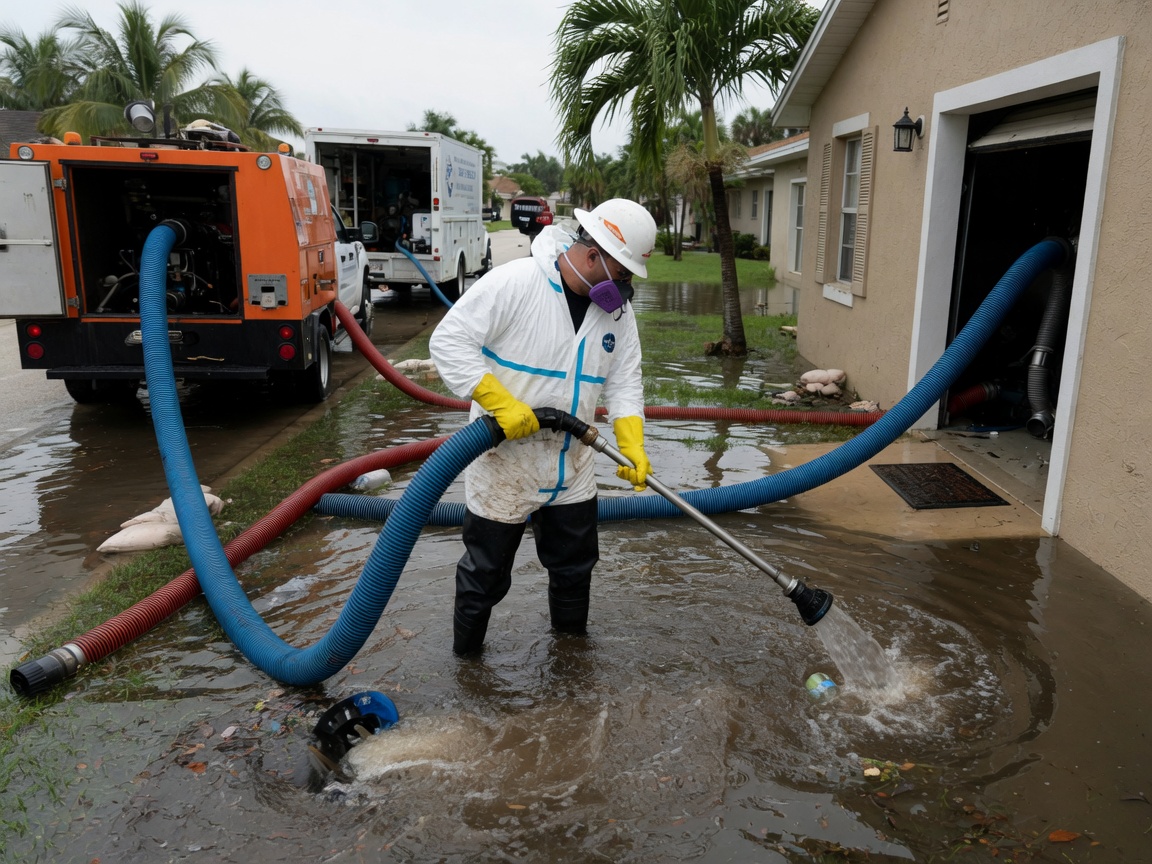
In Winter Park, emergency water extraction teams work through humid subtropical summers when heavy rains flood low-lying streets near Central Park and the Morse Museum. Properties along Park Avenue and around Rollins College often see water enter through older foundations and crawl spaces after downpours overwhelm drainage on US-17 and SR-426. Crews must maneuver equipment on narrow residential roads off SR-436 while protecting the area's cultural landmarks and upscale commercial district from further damage.
Flood Water Extraction in Winter Park — What We Handle
- ✓Response routes must avoid peak traffic on Park Avenue and SR-436 to reach homes near Central Park quickly.
- ✓Mild winters extend the season for extraction calls without the freeze-thaw issues found farther north.
- ✓Work near Rollins College and the Morse Museum requires extra care to limit disruption to visitors and events.
Port St. Lucie homes, especially those built on concrete slabs in neighborhoods like Tradition and St. Lucie West, trap water under flooring when heavy summer rains or tropical systems push groundwater levels up. Extraction crews must pull baseboards and drill weep holes to reach pockets that standard shop vacs miss, or risk hidden moisture feeding mold in the region's high humidity. Older sections near canals or the Indian River often see water migrate laterally through soil, so crews check adjoining rooms even when the original leak appears contained.
After extraction, crews use moisture meters on drywall and subfloors because Port St. Lucie’s frequent afternoon thunderstorms can re-saturate a property within hours if drying is incomplete. Slab homes common in St. Lucie County require different protocols than raised-floor houses; water that seeps under tile or laminate rarely evaporates without forced air and dehumidification. Homeowners who skip professional extraction often face recurring musty odors months later when humidity spikes again.
How It Works in Winter Park
- 1
On-Site Assessment
Technician inspects affected rooms, checks moisture levels in slabs and walls, and identifies water source while noting nearby canals or low spots.
- 2
Water Extraction
High-volume pumps and vacuums remove standing water, followed by drilling weep holes in slab homes to reach trapped moisture.
- 3
Drying and Monitoring
Air movers and dehumidifiers run while daily moisture readings track progress until levels return to normal for Port St. Lucie humidity.
- 4
Final Walk-Through
Homeowner reviews dried areas and receives guidance on preventing re-entry from future storms or groundwater rise.
Flood Water Extraction Services We Offer in Winter Park
✓Storm Flood Extraction
Rapid removal of rainwater that enters through doors, windows or roof leaks during tropical storms common to St. Lucie County.
✓Slab Leak Water Removal
Extraction of water that migrates under concrete slabs in Port St. Lucie homes, followed by weep-hole drilling and moisture mapping.
✓Appliance Leak Extraction
Targeted removal of water from washing machine, water heater or dishwasher failures that pool on tile or laminate floors.
✓Crawlspace Water Extraction
Pumping and drying of standing water in vented crawlspaces found in some older Port St. Lucie neighborhoods near canals.
✓Garage Flood Extraction
Clearing water that enters low-lying garages during heavy rains, including removal of contaminated silt left by street flooding.
Serving All of Winter Park
We regularly handle flood water extraction jobs near:
- 📍Park Avenue
- 📍Rollins College
- 📍Morse Museum
- 📍Central Park
Flood Water Extraction Pricing in Winter Park
Most flood water extraction jobs in Port St. Lucie fall into a few common price bands based on square footage and water depth; final cost depends on access and whether slab drilling is required.
Want the full picture of this service? See our Flood Water Extraction page, or everything we do in Winter Park, FL.